SUV Tents vs Tailgate Tents
Not all vehicle-attached tents work the same way.
Two of the most common options for Australian campers are SUV-attached tents and tailgate-attached tents.
At a glance, they may look similar.
In practice, they suit very different vehicles and camping styles.
This guide breaks down the real differences so you can decide which setup actually fits your vehicle and how you camp.
What Are SUV and Tailgate Tents?
Both styles are designed to connect directly to a vehicle rather than standing alone.
The key difference lies in where and how they attach.
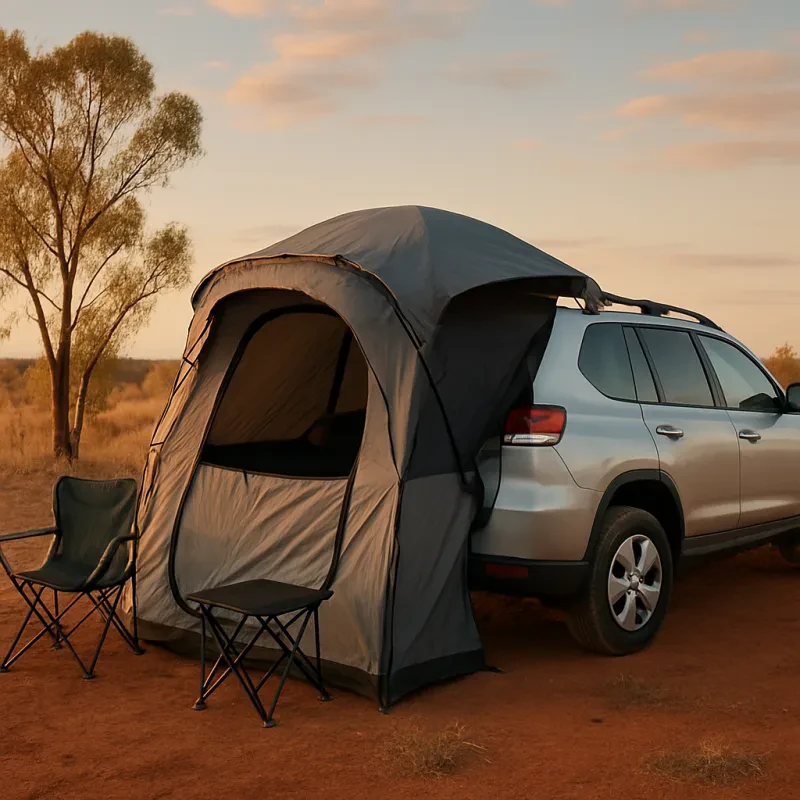
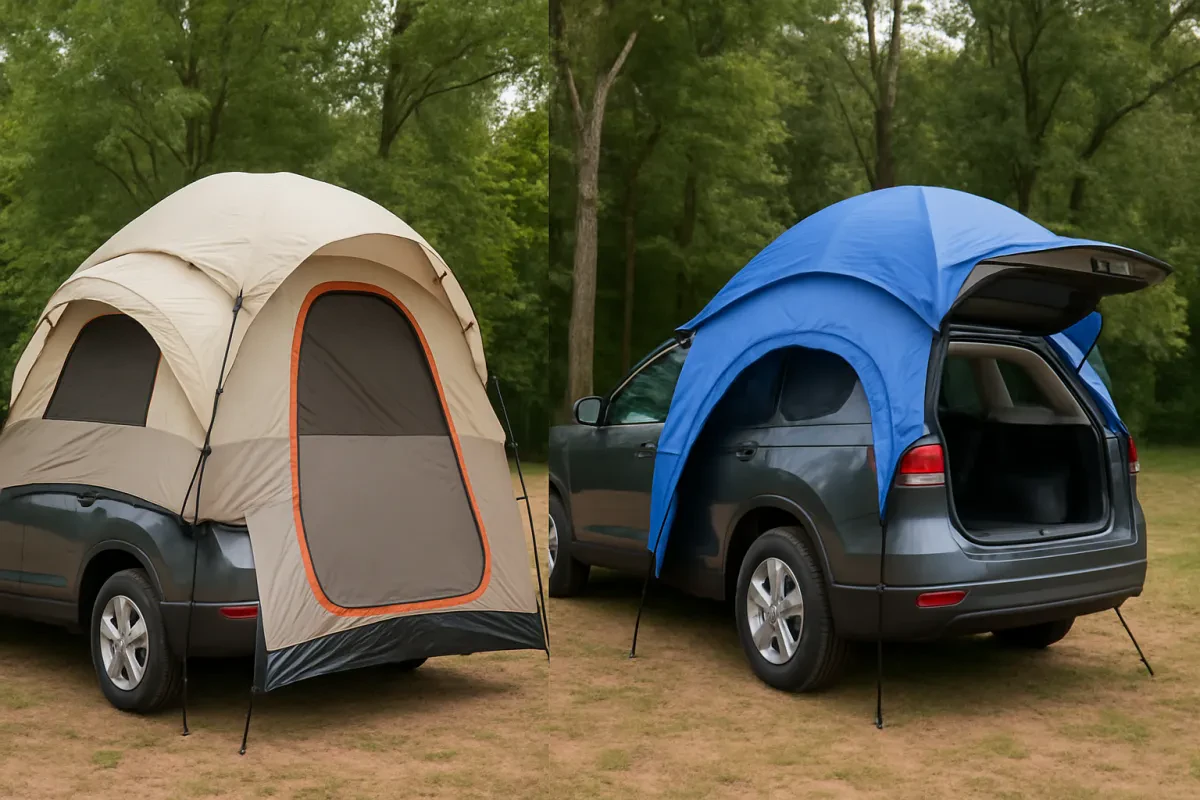
SUV and tailgate tents are built around rear access points, using either the tailgate or rear door as the main connection to the shelter.
The vehicle becomes part of the tent structure, providing height, access, and protection from the elements.
SUV Tent Setups Explained
SUV-attached tents typically connect to wagons, SUVs, and some hatchbacks.
They rely on rear doors or lift-up tailgates to create a sealed sleeping and living area.
These setups work well when:
You want interior access to the vehicle.
You store gear inside the car overnight.
You value sheltered access during bad weather.
SUV tents often feel more integrated with the vehicle, which appeals to touring and road-trip campers.
Tailgate Tent Setups Explained
Tailgate tents are most commonly used with utes and some hatchbacks.
They attach around the open tailgate, extending the sleeping area outward.
These setups are popular because:
They offer generous internal space.
They work well with ute trays and canopies.
They provide easy access to gear stored at the rear.
Tailgate designs often prioritise space over compactness.
Vehicle Compatibility Matters More Than Brand
One of the most common mistakes campers make is choosing based on appearance rather than fit.
SUV tents require enough door height and clearance.
Tailgate tents depend heavily on tailgate width and shape.
Even small differences between vehicle models can affect compatibility.
Measuring your vehicle before choosing a setup is far more important than brand recognition.
Setup Time and Camp Routine
Both styles are quicker to set up than traditional ground tents, but there are differences.
SUV-attached systems often pitch faster once familiar.
Tailgate systems may require slightly more adjustment due to size.
If you move camp frequently, setup time becomes more noticeable over the course of a trip.
Weather Performance in Australian Conditions
Both styles can handle Australian conditions when designed properly.
SUV-attached tents often manage wind well due to their compact profile.
Tailgate tents provide more space but may need careful anchoring in strong winds.
Ventilation, seam sealing, and attachment points matter more than the category itself.
Which Setup Is Right for You?
Choosing between these styles comes down to how you camp and what you drive.
If you rely on interior vehicle access and compact setups, SUV-attached designs often make sense.
If you value space and use a ute or rear-focused setup, tailgate designs are usually more practical.
Both options sit within the broader category of car tents, and understanding where each fits helps narrow your choices before browsing.
Final Thoughts
SUV and tailgate tents solve similar problems in different ways.
Neither is objectively better.
The right choice depends on vehicle shape, camping frequency, and how much space you need at camp.
Understanding these differences before shopping saves time and avoids frustration later.