Car Tents vs Ground Tents
Choosing the right camping shelter isn’t just about comfort.
It affects how quickly you can set up, where you can camp, and how flexible your trip becomes.
Two of the most common options today are vehicle-attached tents and traditional ground tents.
Both work.
Both have strengths.
But they suit very different camping styles.
This guide breaks down the real differences so you can decide which setup actually fits how you camp.
What Are Vehicle-Attached Tents?
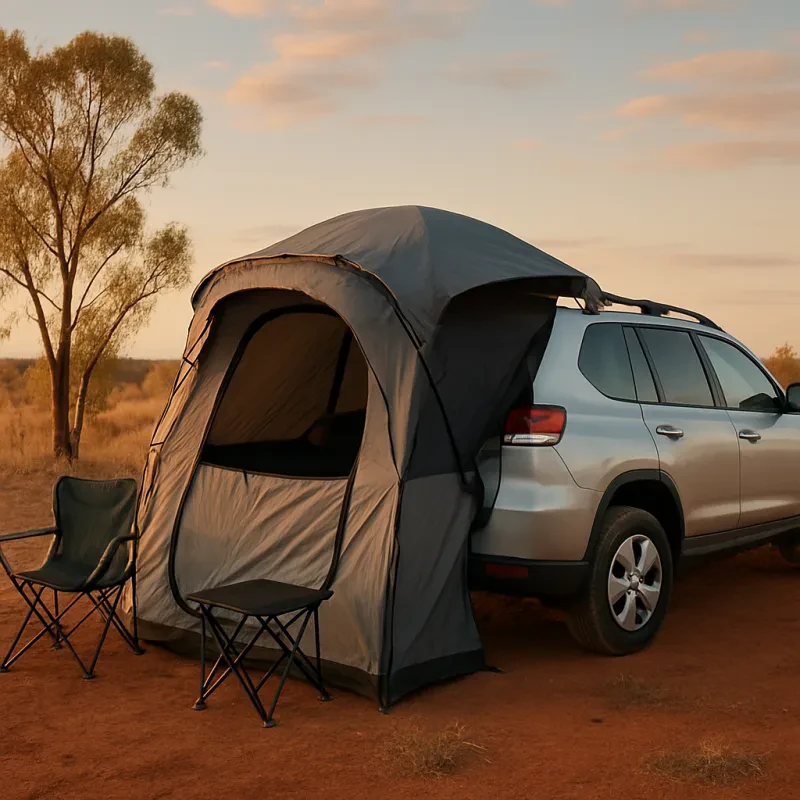
Vehicle-attached tents are shelters that connect directly to a car, SUV, or ute.
Instead of standing alone, they use the vehicle as part of the structure.
They typically attach at the rear or side of the vehicle and extend outward to create a sheltered sleeping area.
Because the vehicle provides height and stability, setup is often faster than pitching a ground tent.
These systems are commonly referred to as vehicle camping tents and are designed for travellers who move camp frequently or rely heavily on their vehicle during trips.
What Are Ground Tents?
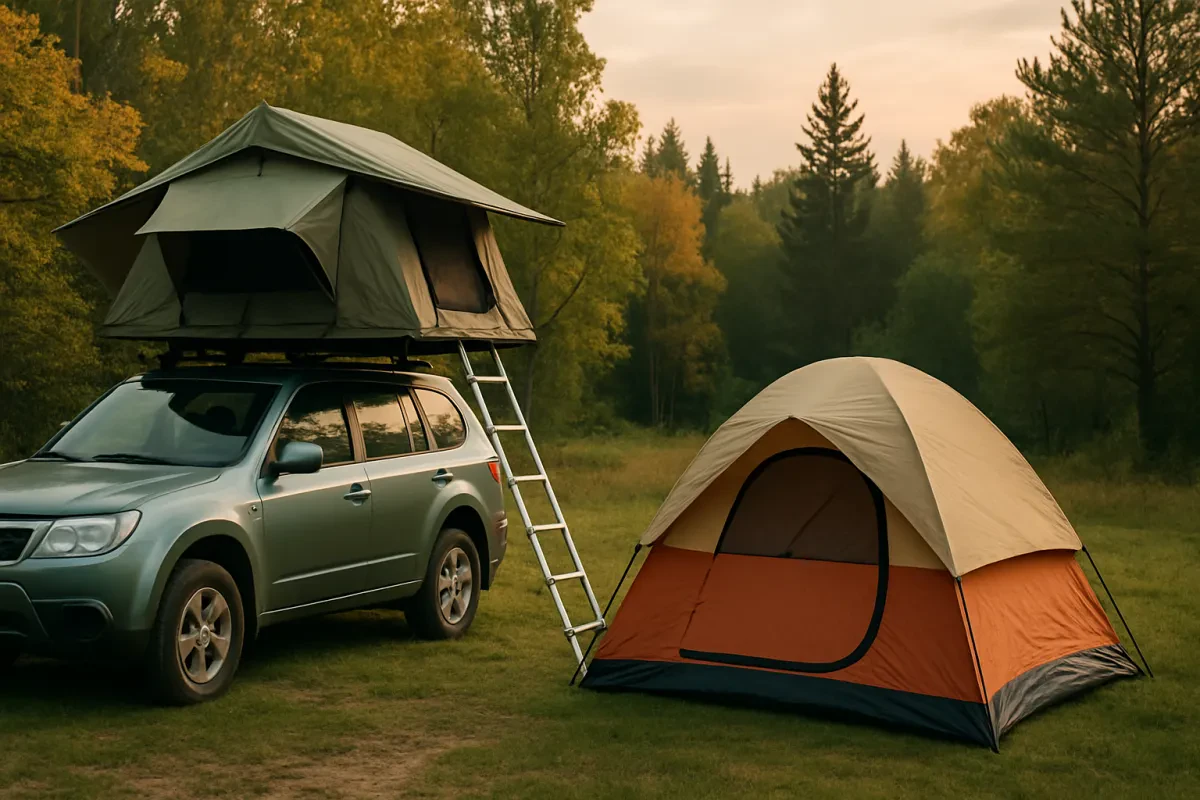
Ground tents are the traditional camping option.
They stand independently using poles, guy lines, and pegs.
They don’t rely on a vehicle for structure, which makes them more flexible in terms of campsite layout.
They can be placed away from the car, closer to water, or in shaded areas.
Ground tents remain popular for longer stays or group camping where vehicles may not stay parked nearby.
Setup Time and Ease of Use
One of the biggest differences between the two comes down to setup.
Vehicle-attached tents are generally quicker to pitch.
Many designs unfold and attach in minutes, especially once you’re familiar with them.
Ground tents usually take longer.
They require clearing ground, aligning poles, and securing guy lines properly.
If you move camp daily or arrive late in the evening, setup time becomes a major factor.
Comfort and Accessibility
Vehicle-attached setups often provide easier access to gear.
You can move between the tent and vehicle without stepping outside.
This is especially useful in bad weather or colder conditions.
It also simplifies packing and unpacking.
Ground tents separate sleeping space from the vehicle.
Some campers prefer this separation, especially for longer stays.
Comfort depends less on the tent type and more on layout, ventilation, and space.
Flexibility at Campgrounds
Ground tents win when it comes to placement flexibility.
You’re not limited by where your vehicle must park.
Vehicle-attached tents require a suitable parking position.
Uneven ground or restricted sites can limit options.
In well-designed campgrounds, this usually isn’t an issue.
In remote or crowded sites, it can matter more.
Weather Performance in Australian Conditions
Australian weather can be unpredictable.
Heat, wind, and sudden rain are common challenges.
Vehicle-attached tents benefit from elevation and airflow around the vehicle.
They often handle wind better when properly anchored.
Ground tents can perform just as well, but setup quality matters more.
Poorly pitched ground tents are more affected by wind and water pooling.
Material quality and design matter far more than the tent category itself.
Storage and Transport
Vehicle-attached tents are usually bulkier when packed.
They take up boot space or require dedicated storage.
Ground tents are often lighter and easier to store when not in use.
If storage space is limited, this is worth considering before choosing.
Who Each Option Suits Best
Vehicle-attached tents are ideal for:
Road trips.
Touring.
Frequent camp moves.
Campers who value fast setup.
Ground tents suit:
Longer stays.
Group camping.
Campers who don’t want to rely on vehicle position.
Neither option is universally better.
The right choice depends on how you actually camp.
Making the Right Choice
The biggest mistake campers make is choosing based on trend rather than need.
If your camping revolves around your vehicle and mobility, a vehicle-attached setup makes sense.
If you prefer flexibility and longer stays, ground tents remain a solid option.
Understanding these differences before browsing categories makes choosing far easier and avoids costly mistakes later.