Best Camping First Aid Kit Australia (2026 Buyer's Guide)
Last updated: February 2026
Australia is one of the greatest outdoor playgrounds on the planet — but it also comes with hazards you simply won't find anywhere else. From venomous snakes and spiders to brutal sun, remote terrain, and unpredictable weather, the bush demands a level of preparedness that a basic bandage roll and some antiseptic cream won't cut it. A well-stocked camping first aid kit isn't an optional extra. It's one of the most important pieces of gear you'll ever pack.
Whether you're setting up a weekend at a national park, embarking on a weeks-long outback road trip, or simply heading to a remote campsite with the family, the right first aid kit gives you the ability to manage injuries quickly and confidently — especially when the nearest hospital could be hours away. This guide will walk you through everything you need to know to choose the best camping first aid kit for your next Australian adventure.
What Makes a Camping First Aid Kit "Good"?
Not all first aid kits are created equal, and the Australian outdoors is a particularly unforgiving environment to test that theory. A good camping first aid kit needs to tick several boxes beyond simply containing bandages and plasters.
Durability and weather resistance come first. Kits that use flimsy cases or standard zip pouches won't survive long in dusty, damp, or UV-heavy conditions. Look for bags made from robust materials like 600D Oxford polyester, with reinforced stitching and water-resistant coatings that can handle a beating on the trail or rattling around in the back of a 4WD.
Organisation and accessibility matter enormously in an emergency. When adrenaline is pumping and seconds count, you need to find the right item instantly. The best kits use colour-coded compartments or labelled modules so that anyone — not just the person who packed the kit — can locate supplies fast. Numbered item systems also make restocking straightforward after a trip.
Relevance to the Australian environment is the factor that separates a genuinely useful kit from a generic one designed for overseas markets. Australia has over 100 species of venomous snakes, deadly funnel-web spiders, cone shells, blue-ringed octopuses, and a host of other wildlife hazards. A kit that doesn't account for envenomation is simply not fit for purpose here.
Finally, portability and size need to match your trip. A compact softpack kit is ideal for day hikes or attaching to a backpack. A larger, modular kit suits car camping or caravanning where space and weight are less of a concern.
Key Items Every Camping First Aid Kit Should Include
Before comparing specific kits, it's worth understanding the essentials that any quality Australian camping first aid kit should contain. Think of these as your non-negotiable baseline.
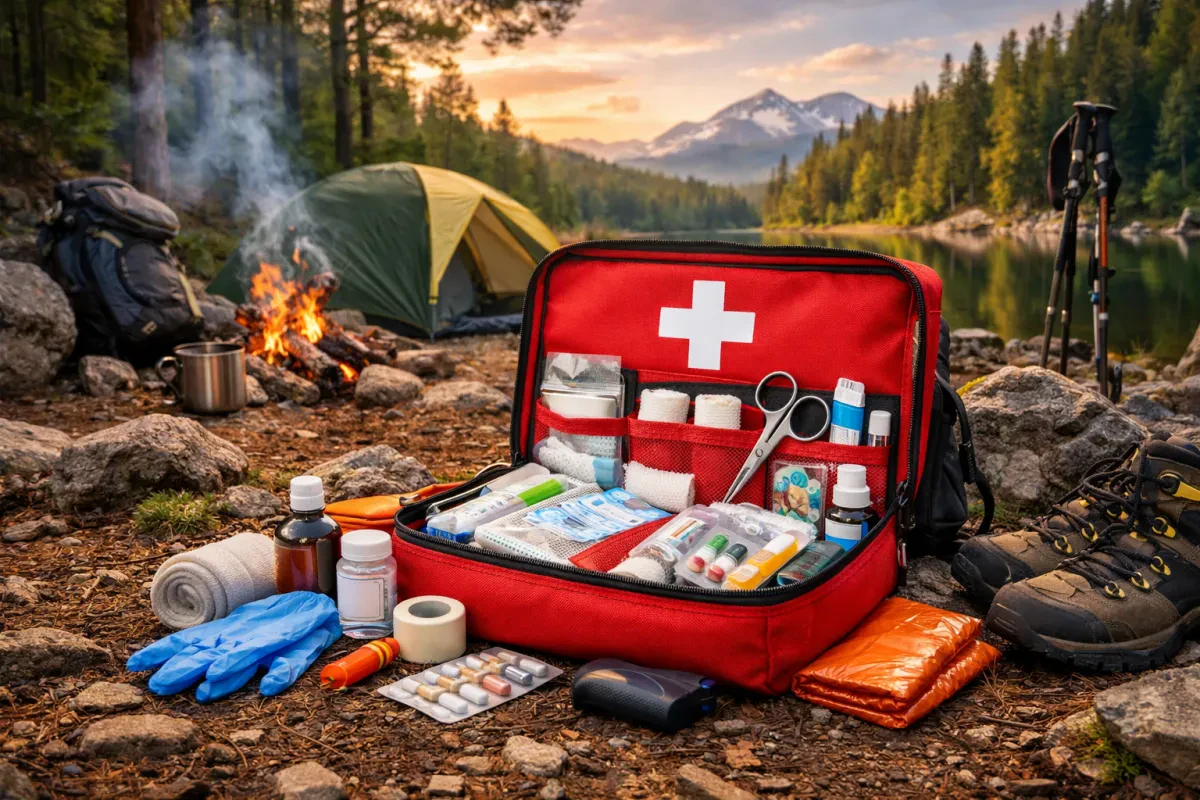
Wound care and dressings form the foundation of any kit. This includes adhesive bandages in assorted sizes, sterile gauze pads, elastic bandages for sprains, and triangular bandages that can double as slings. Medical tape for securing dressings is equally important, as are antiseptic solutions, antibiotic ointment, and burn gel for treating minor burns and preventing infection.
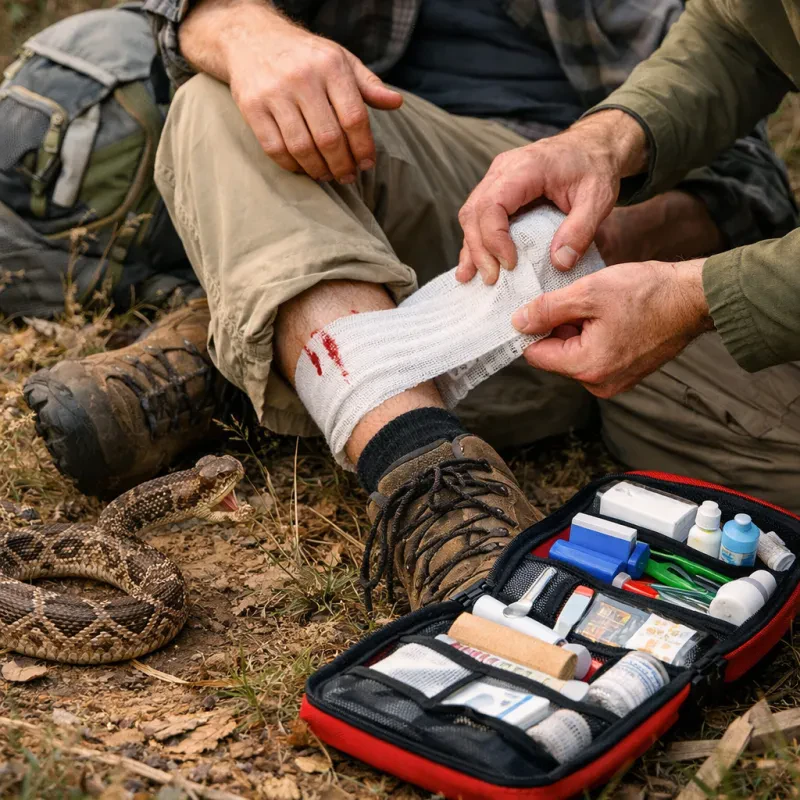
Envenomation supplies are critical and Australia-specific. You'll need heavy-weight compression bandages — sometimes called pressure bandages — specifically designed for the Pressure Immobilisation Technique, which is the gold-standard first aid response to snake bites in Australia. A rigid splint to immobilise the affected limb rounds out this essentials. Some of the better kits now include "indicator bandages" that visually guide you to the correct compression pressure, removing much of the guesswork during a stressful situation.
Tools and equipment should include trauma shears or scissors, tweezers (fine-point ones are especially useful for splinter and tick removal), safety pins, and an instant cold pack for swelling and inflammation. An emergency blanket is lightweight and can be genuinely life-saving in cases of shock or hypothermia during cold desert nights.
Over-the-counter medications round out a comprehensive kit. Pain relievers, antihistamines for allergic reactions and insect stings, and rehydration sachets are all worth including — particularly for longer or more remote trips where dehydration and allergic reactions can quickly become serious.
An emergency information guide — either a printed booklet or laminated card — ensures that even an untrained camper can follow clear step-by-step instructions for common emergencies. The best guides cover snake bites, CPR, shock, severe bleeding, and allergic reactions.
Basic vs. Comprehensive Kits: Which Do You Actually Need?
One of the most common questions when shopping for a camping first aid kit is whether to go with a compact, no-fuss option or invest in something more thorough. The answer depends on three things: where you're going, how long you'll be there, and who you're travelling with.
Basic kits are well-suited to day trips, short camping weekends at established campgrounds with ranger presence, or situations where you're never more than an hour from medical care. These kits typically weigh under 500 grams and fit neatly into a backpack pocket or glovebox. They'll cover cuts, scrapes, minor sprains, insect stings, and blisters — the everyday injuries that come with spending time outdoors. What they won't do is give you meaningful capacity to manage a serious emergency like a snake bite or a significant wound.
Comprehensive kits are designed for trips where isolation is a real factor — think remote national parks, outback road trips, multi-day hikes, or 4WD adventures into areas with limited or no mobile coverage. These kits include the full range of envenomation supplies, larger wound care capacity, medications, and detailed emergency guides. They're heavier and bulkier, but when you're hours from the nearest ambulance, that weight is well justified.
A smart middle-ground approach, increasingly popular among Australian campers, is the modular bundle system. Rather than buying one monolithic kit, you assemble a collection of smaller, purpose-built modules — a compact everyday kit, a dedicated snake bite kit, a vehicle emergency kit — and take whichever combination suits the trip. This gives you flexibility without forcing you to carry everything everywhere.
Best Camping First Aid Kits: Our Top Picks
After evaluating durability, contents, organisation, suitability for the Australian environment, and value for money, here are the kits that consistently stand out.
Best Overall: The Modular Camping Bundle
For campers who want a single purchase that covers every scenario, a well-designed modular camping bundle is the way to go. The best versions combine a compact general-purpose kit with a dedicated snake bite module and a vehicle emergency kit, all colour-coded and clearly labelled. Look for bundles that include a comprehensive emergency handbook as a standalone guide — this is invaluable when you're remote and need to talk someone through first aid over the phone or hand the guide to someone who hasn't done first aid training. The bundle format means you can take the whole setup for car camping or cherry-pick the modules that suit a day hike or a 4WD excursion.
Best for Portability: Compact Remote Area Kit (Softpack)
If you need something lightweight and versatile that can clip onto a backpack, sit in a bum bag, or tuck into a jacket pocket, a compact softpack remote area kit is your best bet. The top options in this category weigh well under 500 grams while still including essential snake bite bandages, a basic wound care range, and an emergency guide. The softpack format is flexible enough to fit into tight spaces, and the best versions feature belt loops or MOLLE-compatible attachments for hands-free carry on the trail.
Best for Snake Bite Preparedness: Dedicated Snake Bite Kit
Australia's snake bite first aid protocol is specific and time-sensitive, and a general-purpose kit simply doesn't give you the focused equipment you need. A dedicated snake bite kit should include multiple heavy-weight compression bandages (ideally with pressure indicators), a rigid splint, a bite-site marker, and a clear step-by-step treatment guide. The best kits in this category have been developed in consultation with Australian venom experts and include bandages that meet the compression requirements recommended by organisations like the Australian Venom Council. These kits are compact enough to attach to a belt or backpack, so there's no reason not to carry one anytime you're in the bush.
Best for 4WD and Caravanning: Rugged Vehicle-Ready Kit
For those who spend time off-roading or caravanning through remote areas, a rugged vehicle-ready kit offers the most comprehensive coverage. These kits are designed to sit in a glovebox, under a seat, or mount to a roll bar, and they typically include a broader range of supplies than a hiking kit — including larger dressings for bigger wounds, burns treatment, and sometimes even CPR guides with visual instructions. The best versions feature luminous piping or bright colouring for visibility in low-light emergencies and use tough, water-resistant cases that won't deteriorate in the heat of a parked vehicle.
Who Should Choose Which Type of Kit?
Choosing the right kit isn't just about what's in it — it's about matching the kit to your specific situation.
Solo hikers and day-trippers should carry at minimum a compact softpack kit with snake bite bandages. Weight and portability are your priorities, and a lightweight kit that stays on your person at all times is far more useful than a comprehensive kit left back at the car.
Family campers heading to established campgrounds benefit from a mid-range comprehensive kit stocked at the campsite, supplemented by a small personal kit each for activities away from camp. Including a children's thermometer, smaller adhesive bandages, and a note of any family members' allergies or medications is a sensible addition.
Remote and outback travellers — whether driving the Gibb River Road, camping in the Red Centre, or hiking in a remote national park — should invest in a full modular bundle. The isolation in these environments means your kit may be the only medical resource available for hours. Include extra compression bandages, rehydration supplies, and a satellite communication device alongside your first aid kit.
4WD and overlanding enthusiasts need a kit that can handle the rough conditions of off-road travel and the possibility of extended stays in remote locations. A vehicle-mounted comprehensive kit, paired with a personal carry kit for time spent away from the vehicle, covers the bases well.
Frequently Asked Questions
How big should a camping first aid kit be? The size of your kit should match the length and remoteness of your trip. For day hikes or short trips near civilisation, a compact kit weighing 300–500 grams is plenty. For multi-day trips or remote camping, aim for a comprehensive kit or a modular bundle that gives you broader coverage. The key principle is this: the farther you are from medical help, the more thorough your kit needs to be.
Do camping first aid kits need to meet Australian compliance standards? There is no single mandatory standard for personal camping first aid kits in Australia. Workplace first aid kits are governed by Safe Work Australia guidelines and state-based Work Health and Safety regulations, but personal-use kits for recreational camping are not subject to the same compliance requirements. That said, kits that are TGA registered and built to Australian standards will generally contain higher-quality, more reliable supplies. Look for ISO 9001 certification as an indicator of consistent manufacturing quality.
Are snake bite kits really necessary for camping in Australia? Absolutely. Australia is home to some of the most venomous snakes in the world, and encounters are more common than most people expect — particularly in regional and rural areas. The Pressure Immobilisation Technique is the recommended first aid response for all suspected snake bites in Australia, and it requires proper compression bandages and a splint. A snake bite kit is not heavy, not expensive, and not optional if you're camping anywhere in the bush.
How often should I replace or restock my camping first aid kit? Check your kit before every trip. Inspect expiry dates on medications, dressings, and ointments, and replace anything that's out of date or has been used. A full restock at the start of each camping season is a good habit. Adhesive bandages and antiseptic solutions tend to expire first, so keep spares on hand.
Can I build my own camping first aid kit instead of buying a pre-made one? You can, and some experienced campers prefer to customise their kits for their specific trips and medical needs. However, a quality pre-made kit gives you a reliable, well-organised starting point that's been put together by first aid professionals. If you want to customise, start with a solid base kit and supplement it with additional items — medications, personal prescriptions, or extra envenomation supplies — rather than assembling everything from scratch.
Final Recommendation
The single best thing you can do before heading into the Australian outdoors is to stop treating your first aid kit as an afterthought. It deserves the same attention you give your tent, your water supply, and your navigation gear.
For most Australian campers, a modular bundle system offers the best combination of coverage, flexibility, and value. It lets you scale your preparedness to match the trip — taking a compact kit on a Sunday morning hike, or the full bundle on a two-week outback adventure — without ever feeling like you're carrying more than you need.
Whatever kit you choose, make sure it includes proper envenomation supplies for the Australian environment, is built from durable and weather-resistant materials, and comes with a clear emergency guide. And before you rely on it, take the time to read through it. Knowing what's in your kit and how to use it before you need it could make all the difference.
Stay safe out there. The bush will always be worth the trip — as long as you're prepared for it.
Browse our full range of safety first aid kits to find the right kit for your next adventure. For our top-rated camping first aid kit, check out our best camping first aid kit product page.