For Australian SUV owners who camp regularly, the rear-mounted tent setup offers a compelling alternative to roof tents, swags, and traditional freestanding shelters. An SUV rear tent attaches directly to your vehicle's tailgate, creating an integrated camping system that leverages your existing investment whilst maintaining access to your cargo space and sleeping area.
This guide examines the practical realities of SUV rear tent camping across Australian conditions, from coastal weekenders to remote outback expeditions.
Understanding SUV Rear Tent Design
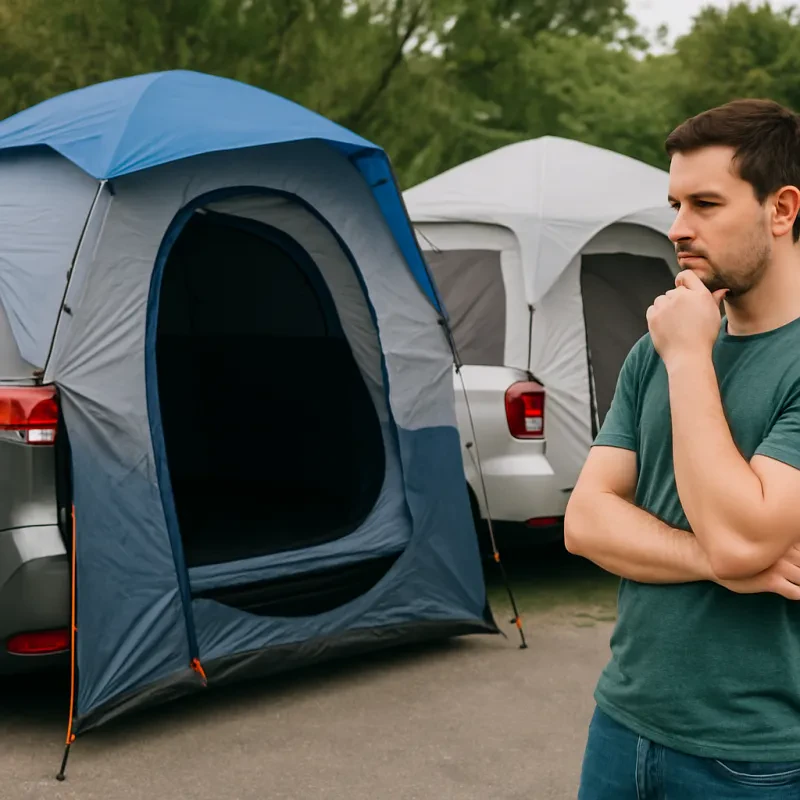
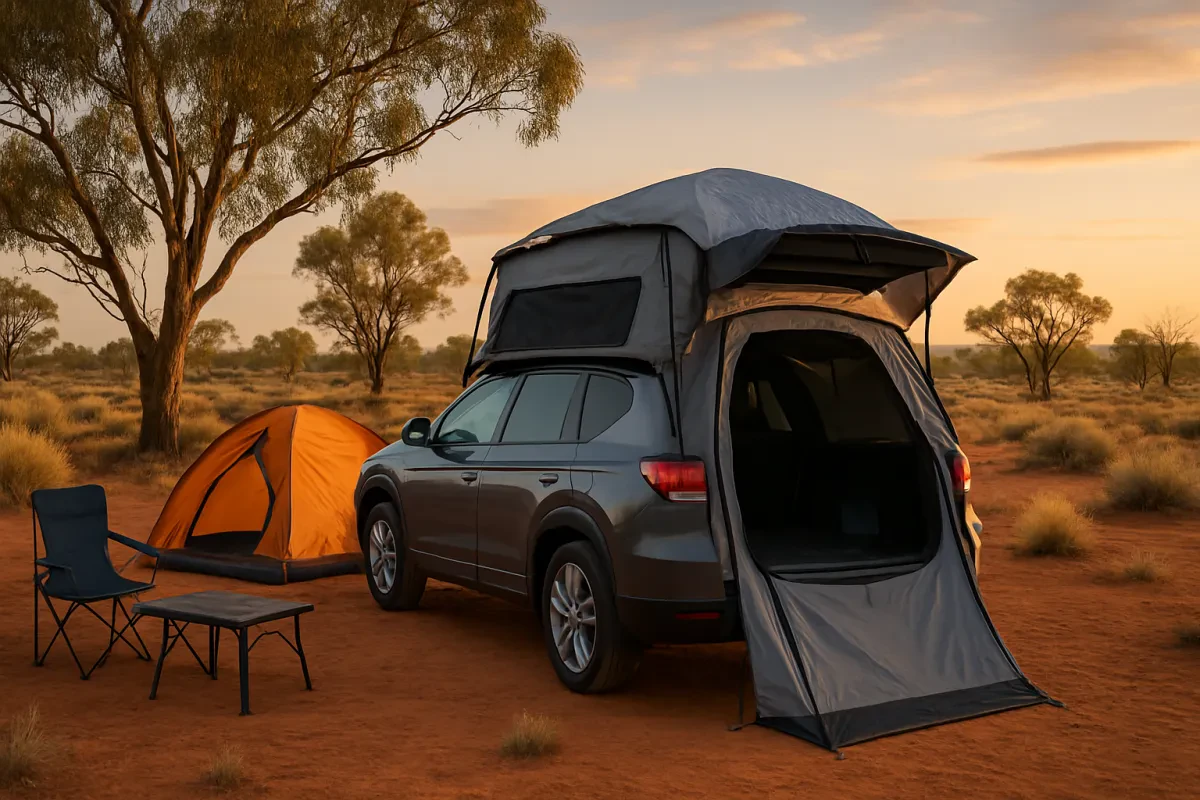
An SUV rear tent creates a weatherproof extension from your vehicle's rear opening. The tent attaches to the open tailgate using straps, sleeves, or clips, forming a sealed connection that allows movement between your vehicle and the tent space without exposure to the elements.
The key distinction from other tent types is integration. You're not simply camping near your SUV—the vehicle becomes part of your shelter system. Most designs allow you to sleep either in the rear tent compartment, inside your SUV with the seats folded, or use a combination approach where the tent serves as an annex or gear storage area.
Common Design Configurations
Full enclosure models provide a completely enclosed space attached to your tailgate, essentially adding a room to your vehicle. These typically measure 2 to 3 metres in depth and match or exceed your SUV's width.
Awning-style designs offer more versatility with removable walls and floor panels. You can configure them as full shelters in poor weather or open-sided awnings for ventilation and views during fair conditions.
Hybrid systems combine sleeping quarters with covered vestibule areas, giving you both protected living space and weatherproof storage adjacent to your vehicle.
SUV Rear Tents vs Roof Tents: A Practical Comparison
Setup and Pack Down
SUV rear tents typically pitch in 10-15 minutes once you're familiar with the process. Setup involves opening your tailgate, attaching the tent interface, extending poles, and pegging out guy ropes. Pack down follows the reverse process, though you'll want to ensure everything's dry before storage.
Roof tents excel here—many hardshell models deploy in under a minute by simply unclipping latches and lifting the lid. Soft-shell roof tents take slightly longer but still beat most ground-based options. If you're doing overnight stops where you pitch and pack daily, roof tents offer clear advantages.
For extended stays where you're establishing a base camp, the setup time difference becomes negligible.
Vehicle Mobility
This represents the most significant practical difference. An SUV tailgate tent anchors your vehicle to your campsite. Once pitched, you cannot drive anywhere without completely packing down your shelter.
Roof tents present the same limitation—you're still grounded once you've deployed sleeping quarters. The difference lies in day-to-day camp use. With a roof tent, you can potentially leave it set up whilst driving short distances at low speeds (though this isn't recommended), whereas a rear tent must be completely detached.
If your camping style involves day trips from a base camp, neither solution is ideal without a second vehicle or a willingness to break camp daily.
Access and Comfort
SUV rear tents offer ground-level access, which matters more than many campers initially consider. You can enter and exit without climbing ladders—beneficial for children, older campers, anyone with mobility limitations, or simply when making multiple trips in and out during the night.
Roof tents require ladder access every time you enter or exit. This becomes tiresome during the night if nature calls, and it's genuinely difficult when you're ill or injured. It also creates noise and movement that disturbs other occupants.
Ground-level camping does mean potential exposure to ground moisture, insects, and uneven terrain, though a quality SUV tent with proper floor design mitigates most concerns.
Storage and Cargo Impact
A roof tent lives on your roof permanently or semi-permanently, consuming roof rack space and creating permanent height increases. You'll need to consider underground car park clearances, garage heights, and increased fuel consumption from aerodynamic drag.
SUV rear tents pack into bags you store inside your vehicle or at home between trips. Your roof rack remains available for kayaks, bikes, or additional storage. However, bulkier models can consume significant cargo space—a relevant consideration if you're already carrying camping gear, fridges, and water.
Weather Protection and Insulation
Quality SUV tents and roof tents both provide adequate weather protection when properly manufactured. The practical difference lies in ground moisture and cold.
Roof tents inherently avoid ground water, making them advantageous in boggy conditions or during heavy rain on poorly draining sites. They also benefit from air circulation underneath, reducing condensation issues.
SUV rear tents require attention to site selection—you need level, well-draining ground. However, they often offer better insulation from cold as you're not elevated into wind streams. In alpine conditions or cold desert nights, ground-level camping can be genuinely more comfortable with appropriate ground insulation.
Cost Considerations
Entry-level SUV rear tents start around $200-300 for basic models, with quality options ranging from $400-800. Premium designs with advanced materials and larger dimensions reach $1000-1500.
Roof tents begin around $1500-2000 for basic soft-shell models, with quality hardshell options ranging from $3000-5000. Premium expedition-grade roof tents exceed $6000.
Beyond the initial purchase, roof tents often require roof rack upgrades to handle the weight, adding $500-1500 to the total investment. SUV rear tents typically work with your existing vehicle setup.
Real-World SUV Camping Scenarios
Weekend Beach Camping
You've driven three hours to a coastal campground on the NSW South Coast. You've got Friday night through Sunday afternoon, with plans to stay put at your site rather than exploring daily.
An SUV tailgate tent excels here. You pitch once on Friday evening, establishing a base with your vehicle serving as both transport and storage. The tent provides sleeping space whilst your SUV's cargo area stores food, coolers, and gear protected from the elements and potential theft. You can move between vehicle and tent without stepping onto sandy ground—particularly useful when it rains.
The ground-level access means children can enter and exit safely, and you can set up camp chairs and cooking areas in the tent's vestibule, creating a proper living space sheltered from coastal winds.
Solo Outback Travel
You're doing a week-long trip through remote South Australia, moving to a different location every 1-2 nights. You need quick setup and pack down, minimal bulk, and the ability to relocate easily.
This scenario highlights the limitations of rear-mounted tents. Daily setup and pack down becomes tedious, and you lose the option to leave camp established whilst exploring during the day. A swag or roof tent would serve you better here, or a rear tent combined with sleeping in the vehicle itself—using the tent purely for gear storage and as a changing room.
However, if you're establishing 2-3 night stays at each location, the rear tent approach regains practicality. Setup becomes a once-per-location task rather than daily routine.
Family Camping in National Parks
You're camping with a partner and two children at a national park in Victoria for four nights. You want comfortable sleeping arrangements, weatherproof storage, and a setup that works if rain sets in.
An SUV tent combined with smart vehicle use handles this well. Adults sleep in the rear tent whilst children sleep in the SUV with seats folded (or vice versa). The tent provides covered space for cooking, eating, and storing gear during wet weather. Everyone has ground-level access, and you maintain security by keeping valuables in the locked vehicle.
The main limitation is vehicle immobility—you'll need to plan activities within walking or cycling distance of camp, or be prepared to break down the tent for day trips.
Festival and Event Camping
You're attending a multi-day music festival or sporting event where you're assigned a specific parking/camping bay and you'll be based there for the duration.
This represents ideal SUV rear tent territory. You maximise your allocated space by parking and establishing a vertical camp footprint. The tent extends your parking bay into living quarters, you've got secure storage in the vehicle, and you can access your SUV's power outlets for charging devices. The weatherproof connection between vehicle and tent means you can retreat to your car during extreme weather without getting soaked.
Vehicle Compatibility and Setup Considerations
Tailgate Dimensions and Opening Angles
Not all SUVs work equally well with rear tents. Measure your tailgate's width and height when fully open, and note the opening angle. Most SUV tents accommodate tailgate widths from 100cm to 140cm, but verify compatibility before purchasing.
Some vehicles—particularly European SUVs—have tailgates that open to unusual angles or feature complex hinge systems that interfere with tent attachment. Japanese and Australian-market SUVs generally offer more straightforward interfaces.
Ground Clearance and Ride Height
Higher-riding 4WDs create a gap between the tent floor and your vehicle's cargo deck. Quality tents account for this with adjustable attachment systems and internal steps or ramps, but significant height differences can create awkward transitions.
Check whether the tent you're considering includes specific compatibility information for your vehicle make and model. Some manufacturers list tested vehicle applications, which eliminates guesswork.
Interior Lighting and Battery Drain
When your tailgate remains open with a tent attached, interior lights can remain active, draining your battery overnight. Before your first camping trip, work out how to disable your cargo area lights:
- Many vehicles have a manual light switch or door sensor override
- Some require removing the light bulb or temporarily disconnecting it
- Modern vehicles may allow light timeout configuration through settings menus
Test this at home rather than discovering a flat battery at a remote campsite.
Exhaust Positioning
Note where your exhaust exits. If you're running your engine for any reason with the tent attached (charging batteries, running heating or cooling), exhaust fumes can accumulate near the tent entrance. This is rarely an issue during normal camping, but it matters if you plan to idle your vehicle whilst at camp.
Site Selection and Setup Strategy
Choosing Your Spot
Unlike a freestanding tent you can reposition after pitching, your SUV rear tent locks you to wherever you park. Invest time in site selection:
Level ground matters more than with a roof tent. You'll be sleeping on this surface, and even slight slopes become uncomfortable over a full night. Use a spirit level app on your phone to check before committing.
Drainage determines whether you wake to a puddle after overnight rain. Avoid low spots, natural water channels, and areas where previous campers' activities have compacted soil into impermeable surfaces.
Morning sun can be pleasant or punishing depending on season and location. In summer, parking with your tent opening facing east means early, intense sunlight and heat. In winter, this same orientation provides welcome warmth.
Wind direction influences both comfort and setup difficulty. Parking with your tent downwind of your vehicle provides some wind break, though strong winds from any direction can make initial setup challenging.
The Setup Process
Park first, then assess. Once you've committed to a spot and opened your tailgate, repositioning requires pack down and restart. Take the extra few minutes to walk around, check ground conditions, and visualise the final setup.
Lay out the tent with the vehicle interface correctly oriented before attempting attachment. This seems obvious, but it's easy to get twisted around, particularly in fading light after a long drive.
Attach to the vehicle first, then establish tent structure with poles and guy ropes. This sequence creates a stable platform and makes the rest of the process easier.
Peg everything, even if conditions seem calm. Australian weather changes rapidly, and overnight winds can develop that weren't present at sunset. Proper pegging also reduces tent movement and associated noise.
Buying Considerations for SUV Tents
Size and Sleeping Capacity
Manufacturer ratings typically assume tight spacing. A "3-person" tent often comfortably sleeps two adults with gear. If you want genuine space, size up from the minimum occupancy rating.
Consider interior height as well as floor dimensions. Taller designs allow changing clothes whilst standing, which significantly improves comfort during multi-day trips. However, height increases wind resistance and potentially reduces stability in exposed locations.
Material Quality and Weatherproofing
Fabric weight indicates durability but also packed bulk. Lightweight materials (around 150-210D polyester) pack smaller and weigh less but may not withstand prolonged exposure to harsh conditions. Heavier fabrics (240D+) offer better long-term durability for frequent use.
Waterproofing ratings should meet at least 2000mm hydrostatic head for Australian conditions. For tropical or alpine use where sustained heavy rain is likely, look for 3000mm or higher.
Seam sealing should be factory-applied, not something you're expected to do yourself. Check product specifications and reviews to confirm seams remain waterproof in actual use.
Pole Quality and Design
Fibreglass poles appear in budget tents. They work adequately in calm conditions but can snap in strong winds or with rough handling. They're also heavier than alternatives.
Aluminium poles offer better strength-to-weight ratios and flex rather than snap under stress. Quality aluminium poles with shock cord internals make setup easier and more reliable.
Pole sleeve vs clip attachment affects setup speed. Clip systems pitch faster and allow better ventilation, but sleeve designs often provide superior wind resistance.
Ventilation and Condensation Management
Condensation develops in any tent, but it's particularly noticeable when camping attached to a vehicle that creates additional temperature differentials. Look for:
- Large mesh panels with weatherproof covers
- Adjustable vents at multiple heights
- Designs that promote through-ventilation
- Adequate internal space to avoid contact between sleeping occupants and walls
Poor ventilation leads to wet gear, damp sleeping bags, and generally miserable mornings.
Floor Design and Protection
Bathtub floors with raised edges (at least 10-15cm) prevent water ingress during rain. This matters enormously in Australian downpours where water can run across the ground in sheets.
Removable floors offer versatility—you can remove them for easy cleaning or to create an open-sided awning configuration in dry weather.
Footprint compatibility protects the tent floor from abrasion and sharp objects. Some tents include custom footprints, others require separate purchase. Either way, using a footprint extends tent life significantly.
Attachment System Design
The interface between tent and vehicle determines setup ease and weather sealing. Better designs feature:
- Multiple adjustment points for different vehicle sizes
- Substantial straps with quality buckles
- Reinforced attachment points that won't tear with repeated use
- Clear marking showing which straps attach where
Examine this area carefully when comparing options. A poor attachment system creates frustration every time you set up camp.
Expanding Your SUV Camping System
Many campers start with a basic rear tent and expand over time as they identify specific needs. Consider how these additions might integrate:
Awning attachments extend sideways from some SUV tent designs, creating additional covered space without requiring a separate structure. This works well for extended stays where you want sheltered living areas.
Annexe walls convert the space beneath an awning into enclosed rooms for storage or additional sleeping capacity.
Internal organisation improves with gear lofts, hanging pockets, and lantern hooks. Some tents include these features, others require aftermarket additions.
Lighting systems purpose-built for tent camping—rechargeable LED strips or lanterns with magnetic or hanging attachment—transform usability after dark.
Maintenance and Long-Term Care
After each trip, set up your SUV tent at home to air dry completely before storage. Australian humidity accelerates mould and mildew growth, which damages fabric and creates health concerns.
Clean mud, sand, and dirt from the tent whilst it's set up, using a soft brush and gentle spray. Avoid aggressive cleaning that might damage waterproof coatings.
Inspect attachment straps and buckles for wear after every few trips. These components experience the most stress and will eventually require replacement. Better to identify issues at home than mid-trip.
Store the tent loosely packed in a breathable bag rather than compressed in its stuff sack. This maintains fabric condition and waterproofing longevity.
Check pole shock cord tension periodically. Shock cord stretches with use, and slack cords make setup frustrating. Replacement shock cord is inexpensive and easy to restring.
Finding Your SUV Rear Tent Setup
When you're ready to examine specific options, browsing through available [SUV / Hatchback / Tailgate Tents](SUV / Hatchback / Tailgate Tents) provides perspective on current designs, dimensions, and pricing across the market. Pay particular attention to vehicle compatibility information and included features rather than focusing solely on cost.
Your ideal setup depends on how you actually camp rather than how you imagine you might camp. Consider your last five camping trips—where you went, how long you stayed, whether you moved between sites, and what caused frustration with your current setup. An SUV tent addresses some camping challenges whilst introducing different limitations.
Making the Decision
An SUV rear tent works brilliantly for specific camping styles—weekend trips to established sites, festival camping, extended stays where you're happy to remain based at one location, or as part of a hybrid system where the tent serves as an annex whilst you sleep in the vehicle.
The approach becomes less practical when you need daily vehicle mobility, you're doing extensive dispersed camping where you move every day, or your camping group exceeds what the tent and vehicle can accommodate comfortably.
Understanding these practical realities before purchasing prevents disappointment and ensures your investment matches your actual camping patterns. For many Australian SUV owners who camp regularly at accessible sites and value the integration between vehicle and shelter, a quality rear tent becomes an essential piece of equipment that transforms how they experience the outdoors.