Choosing an SUV tailgate tent in Australia requires understanding not just product specifications, but how different designs perform across the country's diverse camping environments—from tropical Queensland humidity to Victoria's alpine cold, from coastal salt exposure to outback dust and heat.
This guide focuses on educating buyers about what actually matters when selecting a tailgate tent, rather than pushing specific products. Understanding the underlying principles helps you evaluate any tent you're considering, whether you're buying now or researching for a future purchase.
What Makes a Good SUV Tailgate Tent
Weather Resistance That Matches Australian Conditions
A good SUV tent provides reliable weather protection across varied conditions, not just light coastal drizzle. The key metrics that determine real-world performance:
Waterproofing ratings should meet at least 2000mm hydrostatic head for general Australian use. If you're camping in tropical regions during the wet season or in alpine areas where sustained rain is common, look for 3000mm or higher. These numbers indicate how much water pressure the fabric withstands before leaking—higher ratings mean better protection in heavy rain.
Seam sealing must be factory-applied and comprehensive. Poorly sealed seams leak regardless of fabric quality. Quality tents feature taped seams throughout, not just on the roof panels. Check product specifications and user reviews specifically mentioning seam performance in actual rain, as marketing claims sometimes exceed reality.
Floor bathtub design with raised edges (minimum 10-15cm) prevents water running underneath from entering the tent during heavy downpours. Australian storms can produce intense rainfall that creates sheet flow across the ground—a flat floor design will let water in.
Durability for Frequent Use
Tents that fall apart after a few trips waste money regardless of initial cost. Durability indicators include:
Fabric denier (thickness) between 210D and 300D polyester provides good balance between weight and longevity. Lighter fabrics under 200D work for occasional use but may not handle regular setup/packdown and exposure to Australian sun. Heavier fabrics above 300D increase durability but add bulk and weight.
Reinforced stress points at pole connections, stake loops, and attachment points prevent tearing where force concentrates. Examine these areas closely—stitching should be bar-tacked (multiple passes creating reinforced squares) rather than simple straight stitching.
Quality zippers from recognised manufacturers (YKK being the most reliable) resist jamming and breaking. Tent zippers experience constant use in dusty, sandy conditions. Budget tents often compromise here, and a failed zipper in the field effectively destroys the tent's functionality.
UV resistance matters enormously in Australia's intense sunlight. Look for UV-resistant fabric treatments and check reviews from Australian users about fabric degradation over time. Tents used frequently in Queensland sun face different challenges than those primarily used in Tasmania.
Practical Setup and Use
A tent might excel on paper but prove frustrating in actual use. Practical considerations include:
Setup complexity determines whether you'll actually want to use the tent after a long drive. Quality designs pitch in 10-15 minutes once you're familiar with them. Overly complex systems with numerous poles, unclear attachment points, or fiddly adjustment mechanisms create friction every trip.
Attachment system design affects both setup ease and weather sealing. Better systems feature clearly marked straps with substantial buckles, multiple adjustment points for different vehicle sizes, and reinforced connection areas. Poor designs create frustration and may not seal properly against wind-driven rain.
Pole quality impacts both setup reliability and wind performance. Aluminium poles with shock cord internals offer good strength-to-weight ratio and flex under stress rather than snapping. Fibreglass poles work adequately in calm conditions but represent a compromise. Premium tents sometimes use carbon fibre or advanced aluminium alloys for optimal performance.
Ventilation design prevents condensation buildup that leads to wet gear and uncomfortable nights. Effective ventilation requires mesh panels with weather-resistant covers, adjustable vents at multiple heights, and overall design that promotes air movement without compromising weather protection.
Size and Internal Space
Manufacturer capacity ratings typically assume tight spacing. A "3-person" tent often comfortably sleeps two adults with gear space. Consider:
Floor dimensions determine actual usability. Measure whether the tent accommodates your sleeping mats or mattresses with room for gear. Many campers discover too late that their tent technically fits three people who don't mind touching shoulders all night.
Peak height affects livability during extended stays. Being able to change clothes whilst standing, even if only in the centre section, significantly improves comfort. However, taller designs catch more wind and may be less stable in exposed locations.
Vestibule space provides covered area for gear storage, cooking (with appropriate precautions), or simply sitting out of the weather. Tents with generous vestibules function better as actual living spaces rather than just sleeping compartments.
Australian Conditions to Consider
Climate Zone Variations
Australia's climate diversity means a tent working brilliantly in one region may struggle in another.
Tropical and subtropical regions (Queensland coast, Northern Territory, northern Western Australia) present high humidity, intense UV exposure, heavy rainfall events, and constant insect pressure. Tents for these areas need excellent ventilation to manage condensation, robust waterproofing for tropical downpours, UV-resistant materials, and comprehensive insect screening.
Temperate zones (coastal NSW, Victoria, South Australia, southern Western Australia) experience variable conditions—hot dry summers, cold wet winters, and unpredictable transitional seasons. Versatile designs with adjustable ventilation suit these regions, allowing configuration for both warm and cold conditions.
Alpine and high-country areas (Snowy Mountains, Tasmanian highlands, Victorian Alps) demand wind resistance, effective insulation, and reliable performance in near-freezing temperatures. Lower-profile designs generally handle wind better than tall configurations. Four-season capability becomes relevant for winter camping.
Arid and semi-arid regions (most of inland Australia) feature intense daytime heat, cold nights, minimal rainfall, but occasional severe storms. Dust penetration becomes a concern—quality zippers and closure systems matter. Reflective fabrics or light colours help manage heat absorption.
Site Accessibility and Terrain
Where you actually camp influences tent requirements:
Established campgrounds with level, cleared sites make setup straightforward. Almost any tent design works adequately. You can focus more on comfort and space, less on rugged durability.
National park and forest camping often involves less improved sites—potentially uneven ground, proximity to trees dropping debris, and exposure to wildlife. Ground-level camping means protecting against ground moisture and ensuring your tent floor handles rough surfaces.
Beach and coastal camping exposes tents to salt spray, sand infiltration, and often significant wind. Rinsing and cleaning after coastal trips becomes essential for tent longevity. Designs with good guy-rope systems and lower profiles handle wind better.
Remote and outback camping requires self-sufficiency—if something breaks, you're managing it yourself. Simpler designs with fewer components to fail and robust construction throughout become priorities over features and comfort.
Vehicle Types and Compatibility
Australian SUV diversity affects tent compatibility:
Large 4WDs (LandCruiser, Patrol, Prado-sized vehicles) have wide tailgates and high ground clearance. Most SUV tents accommodate these, but check height adjustment range and whether included components bridge the gap between tent floor and cargo deck.
Mid-size SUVs (Fortuner, Everest, MU-X, Pajero Sport class) represent common platforms. Most tailgate tents target this segment, offering good compatibility. Verify your specific vehicle's tailgate dimensions against tent specifications.
Compact SUVs (RAV4, CX-5, Outlander, Tiguan size) sometimes fall at the smaller end of "SUV tent" compatibility ranges. Check minimum tailgate width specifications and whether the tent's attachment system accommodates smaller openings.
Wagon-style vehicles (Outback, Forester, some Subaru models) technically qualify as SUVs but may have lower ride heights and different tailgate designs. Some tents work well, others don't. Specific compatibility information becomes more important.
Popular SUV Tailgate Tent Styles
Full Enclosure Designs
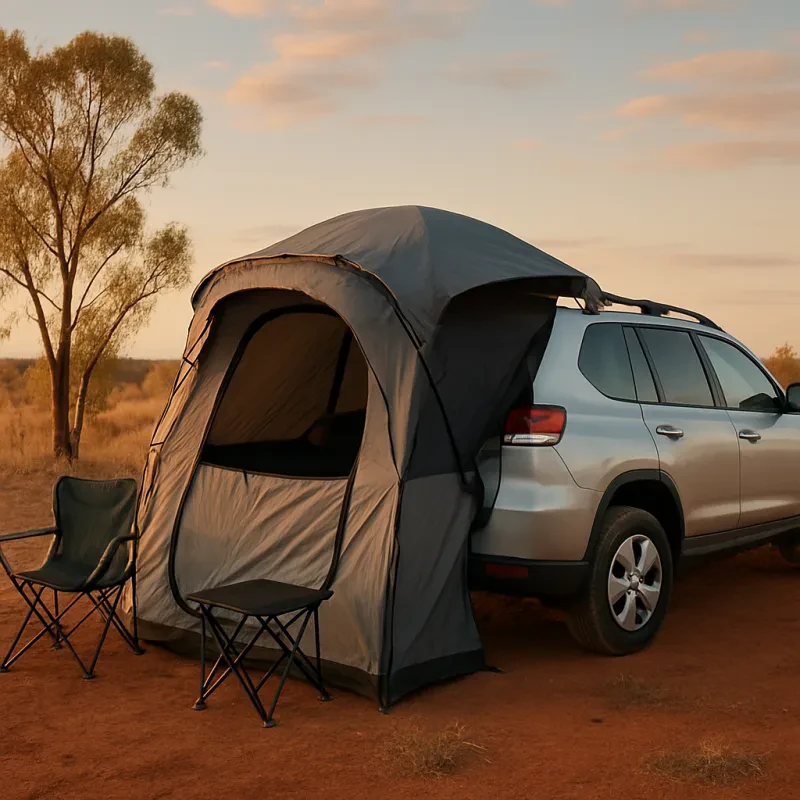
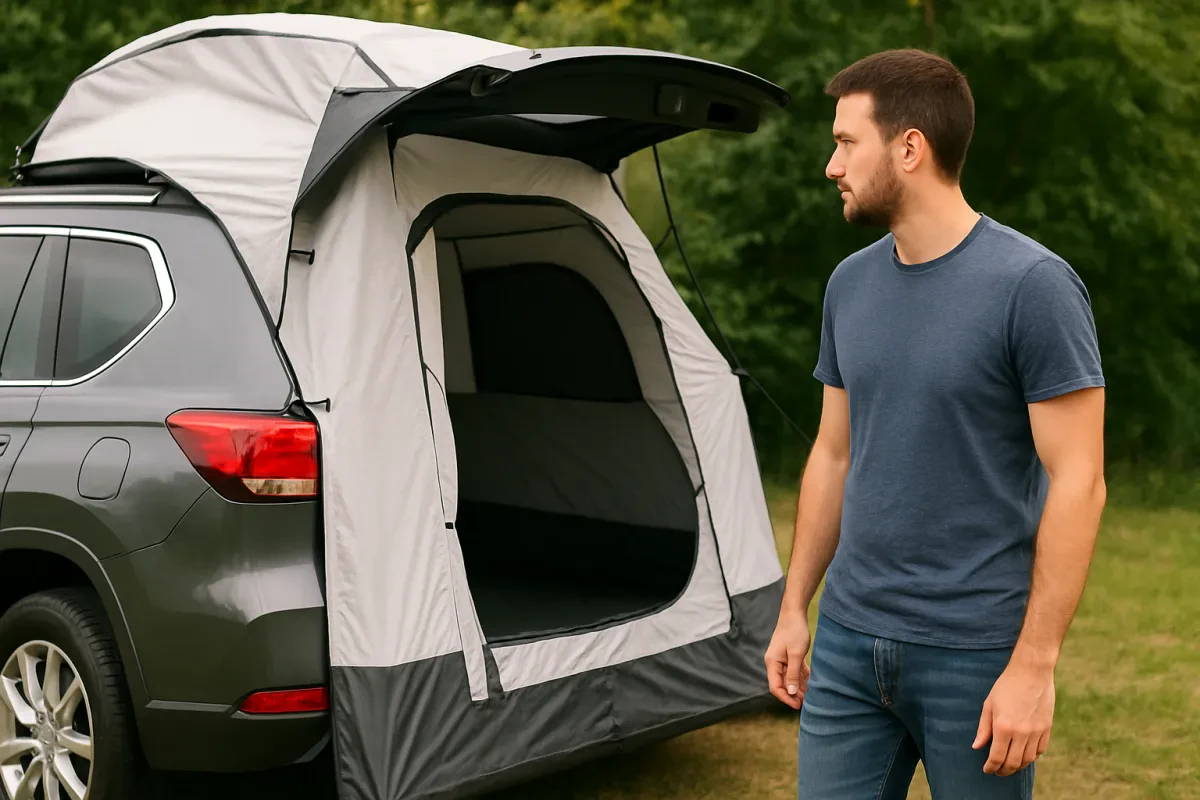
These create a completely enclosed room extending from your tailgate, typically measuring 2-3 metres deep and matching or slightly exceeding your vehicle's width.
Advantages: Maximum weather protection, genuine living space, better security and privacy, often include sewn-in floors with bathtub edges.
Limitations: Fixed configuration limits versatility, can be heavier and bulkier when packed, full enclosure may trap heat in summer without adequate ventilation.
Best suited for: Weekend camping at established sites, family camping where you need protected space, wet weather camping where weather resistance is paramount, situations where you're establishing a base camp for multiple nights.
Awning-Style with Optional Walls
These deploy as open awnings with removable wall and floor panels, allowing configuration from fully open to completely enclosed.
Advantages: Versatile configuration options, better ventilation when open, can function as both shade structure and sleeping quarters, often lighter when panels are left behind.
Limitations: More components to manage and potentially lose, setup complexity increases with more pieces, may not seal as effectively as purpose-built enclosed designs.
Best suited for: Variable weather camping where conditions change, campers who want flexibility between open and enclosed configurations, longer trips where different setups suit different activities, experienced campers comfortable managing multiple components.
Side-Opening Designs
Rather than extending straight back from the tailgate, these attach and then open to the side, creating an L-shaped footprint with your vehicle.
Advantages: Allows vehicle rear access in some configurations, can create wind-protected corners, different spatial arrangement than straight-back designs, sometimes permits easier multiple tent setups in group camping.
Limitations: Requires more lateral space, may complicate site selection in crowded campgrounds, attachment mechanisms sometimes more complex, less common so fewer options available.
Best suited for: Campers wanting to maintain some vehicle access, group camping situations, specific site configurations where lateral space exceeds front-to-back space.
Dome and Pop-Up Styles
These feature pre-assembled frame systems that deploy quickly, similar to pop-up gazebos but designed to attach to tailgates.
Advantages: Very fast setup and pack down, simple deployment mechanisms, often lighter than traditional pole-based designs, good for frequent short trips.
Limitations: Can be more expensive, frames eventually wear from repeated deployment, may have less vertical space than traditional designs, repairs can be more difficult if frames fail.
Best suited for: Campers prioritising setup speed, frequent overnight or weekend trips, situations where you're pitching and packing regularly, those willing to pay premium for convenience.
How to Choose the Right One
Assess Your Actual Camping Patterns
Rather than imagining ideal scenarios, examine how you actually camp:
Trip frequency and duration: If you camp monthly or more, invest in quality that handles regular use. If you camp 2-3 times yearly, mid-range options often suffice. For week-long trips versus overnighters, comfort and space become more important than pack-down speed.
Typical locations: Review your last 5-10 camping trips. Were they established campgrounds or dispersed camping? Coastal or inland? How often did you encounter rain? This historical pattern predicts future needs better than aspirational thinking.
Group composition: Solo camping has different requirements than couples camping, which differs from family camping. Be honest about who actually camps with you, not who might theoretically join.
Vehicle mobility needs: How often do you drive from camp during a trip? If you take daily excursions, a tailgate tent creates complications. If you typically establish base camp and stay put, this limitation matters less.
Match Tent Capabilities to Conditions
Once you understand your camping patterns, match tent features to actual requirements:
For predominantly dry-weather camping: Moderate waterproofing (2000mm) and good ventilation take priority over maximum weather resistance. You can accept lighter materials that pack smaller.
For wet-weather or tropical camping: Maximum waterproofing (3000mm+), sealed floors with high bathtub edges, excellent seam sealing, and robust materials become non-negotiable. Accept additional weight for reliability.
For hot-climate camping: Prioritise ventilation—multiple mesh panels, adjustable vents, configurations allowing full opening. Light-coloured fabrics reflect heat better than dark colours.
For cold-weather camping: Look for designs minimising drafts, good ground sealing, and potentially space for a small heater (with appropriate safety measures). Four-season ratings indicate suitability for cold conditions.
For windy or exposed sites: Lower-profile designs, robust pole systems, comprehensive guy-rope arrays, and reinforced stake points handle wind better than tall, minimalist designs.
Consider the Total System Cost
Purchase price represents only part of the actual cost:
Required accessories: Some tents include everything needed for setup, others require separate purchase of pegs, guy ropes, footprints, or pole assemblies. Verify what's included versus what costs extra.
Maintenance and longevity: A $300 tent requiring replacement after two seasons costs more over five years than an $800 tent lasting that entire period. Quality construction and materials often prove cheaper long-term.
Storage and transport: Bulkier tents consume vehicle space that might otherwise carry other gear. Consider packed dimensions and weight in context of your total camping kit and vehicle capacity.
Replacement parts availability: Can you buy replacement poles, pegs, or attachment straps if components break or wear? Some brands offer comprehensive spare parts, others leave you needing complete replacement after any significant failure.
Evaluate Information Sources
When researching specific tents, consider information quality:
Manufacturer specifications provide baseline data but represent ideal conditions. Treat them as starting points requiring verification.
Australian user reviews offer more relevant insights than international reviews because they reflect local conditions. A tent performing well in UK drizzle may struggle in Queensland downpours. Look for reviews mentioning specific Australian locations and weather conditions.
Long-term reviews (6+ months of use) reveal durability and ongoing satisfaction better than initial impressions. New tent smell and excitement fade—does the reviewer still recommend it after a season of use?
Video reviews and setup demonstrations show actual setup processes and reveal practical details that written descriptions miss. Watch for setup complexity, actual packed size compared to claims, and how components fit together.
Compare Within Your Budget Range
Rather than fixating on the absolute "best" tent, identify the best option within your budget:
Budget range ($200-400): Expect compromises in materials, features, or durability. Focus on basic weather protection, straightforward setup, and compatibility with your vehicle. These work for occasional use or when you're exploring whether tailgate camping suits you before investing heavily.
Mid-range ($400-800): This segment offers good balance between cost and capability. You should get reliable waterproofing, decent materials, proper ventilation, and construction lasting several seasons of regular use. Most serious recreational campers find their optimal value here.
Premium range ($800-1500+): You're paying for advanced materials, superior weather resistance, refined design details, comprehensive features, and typically better support and warranties. Justified for frequent camping, harsh conditions, or when tent failure creates genuine safety concerns.
Are SUV Tailgate Tents Worth It?
When They Excel
SUV tailgate tents provide genuine value in specific circumstances:
Weekend camping at established sites: Quick setup, weatherproof connection to your vehicle, secure storage, and comfortable ground-level access make them ideal for regular weekend trips to campgrounds and national parks.
Festival and event camping: Maximising your allocated parking space whilst maintaining vehicle access for storage and charging makes tailgate tents smart for multi-day events.
Base camp scenarios: When you're establishing a camp for multiple nights and don't need daily vehicle mobility, tailgate tents create excellent integrated shelter systems.
Couples and small families: Two adults or an adult with children fit comfortably in most designs, creating adequate space without excessive bulk or cost.
Transitional camping: When exploring whether regular camping suits you before investing in caravans or comprehensive camping trailers, tailgate tents offer capable shelter at moderate cost.
When They're Not Ideal
Certain camping styles don't align with tailgate tent strengths:
Highly mobile camping: If you move daily or take frequent day trips requiring vehicle use, constant pack-down and setup creates friction. Roof tents, swags, or quick-pitch freestanding tents serve you better.
Larger groups: Most tailgate tents comfortably accommodate 2-3 people. Families with multiple children or groups need supplementary shelter anyway, potentially making large freestanding tents more practical.
Remote expeditionary camping: When vehicle mobility matters for exploring, accessing supplies, or emergency egress, tying your vehicle to a tent creates limitations you might not want to accept.
Extreme minimalists: If you're committed to ultralight backpacking-style camping from your vehicle, a tailgate tent adds weight and bulk you'd prefer to avoid.
Cost-Benefit Analysis
Consider what you're actually getting for your investment:
A quality mid-range tailgate tent ($500-700) used 15 times per year provides roughly $50 per outing in the first year, decreasing each subsequent year. Compare this to:
- Accommodation costs ($100-300+ per night for most hotels or cabins)
- Caravan park cabin fees ($80-200+ per night)
- Even basic camping fees plus tent hire if applicable
The payback period for regular campers often runs just months. For occasional campers, the equation changes—you might need 2-3 years to justify the investment versus other options.
Making the Decision
Whether a tailgate tent suits you depends on honest assessment of your camping reality:
You'll likely appreciate a tailgate tent if you:
- Camp regularly (monthly or more) at established sites
- Value quick setup and integrated vehicle access
- Typically establish base camps for 2+ nights
- Camp as a couple or small family
- Want weatherproof shelter without massive investment
- Prefer ground-level camping over roof tents or roof-top setups
You'll likely prefer alternatives if you:
- Need daily vehicle mobility during trips
- Camp with larger groups requiring more space
- Prioritise absolute minimum weight and bulk
- Mostly do overnight stops rather than extended stays
- Prefer completely freestanding shelter independent of your vehicle
Finding Your Tailgate Tent
When you're ready to examine specific options and current market offerings, reviewing available [SUV / Hatchback / Tailgate Tents](SUV / Hatchback / Tailgate Tents) provides insight into design variations, pricing, and which models suit different vehicle types and camping styles.
Pay attention to detailed specifications around vehicle compatibility, included components, and fabric ratings rather than marketing language about "revolutionary design" or "ultimate comfort." The right tent for you matches your actual camping patterns, vehicle type, and budget reality—not some idealised camping vision that may never materialise.
Understanding what makes a good tailgate tent, how different designs perform in Australian conditions, and which features matter for your specific use helps you evaluate any tent you encounter. These principles remain constant even as specific products and brands change over time, giving you the foundation to make informed decisions whenever you're ready to purchase.